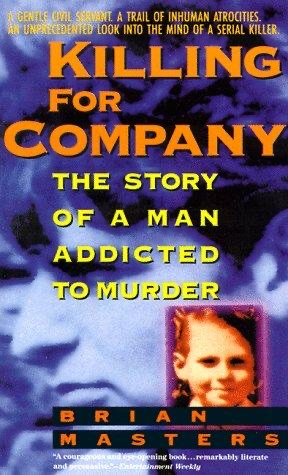
Cover of Killing for Company

Killing for Company

Brian Masters

4 ideas

  1. Dennis Nilsen, the civil servant who killed

    Between 1978 and 1983, Dennis Nilsen, a mild-mannered Jobcentre clerk, killed at least twelve young men, many of them homeless or transient men he met in London pubs. He killed them at 195 Melrose Avenue in Cricklewood and at 23 Cranley Gardens in Muswell Hill, and kept their bodies for days or weeks before dismembering them. He was caught in February 1983 when a drain engineer found human remains blocking the Cranley Gardens drains. Nilsen confessed at once and in detail, and was convicted of six murders and two attempted murders.

  2. Murder as a way to stop someone leaving

    Nilsen's own explanation, 'killing for company', frames the murders as an extreme answer to isolation. Killing a guest guaranteed he could not walk out in the morning, and the corpse became a companion he could bathe, dress and sit beside. The claim is that the violence served possession and the removal of the other person's will, not rage or pleasure in suffering.

  3. Explaining a killer without excusing him

    Masters treats Nilsen as an ordinary man to be understood rather than a monster to be recoiled from. He reconstructs how a lonely person's fantasies, drinking and self-justifications can build step by step toward murder. The lens holds that calling someone a 'monster' closes off inquiry, and that tracing the causes of an act is a separate task from judging it.

  4. Unmissed victims let killing go undetected

    The mechanism is social rather than a matter of skill: when a group's absence goes unregistered, a predator can operate in plain sight in a busy city. The case shows how indifference to marginal lives becomes a structural shield for violence against them.

Save and mark ideas in the app