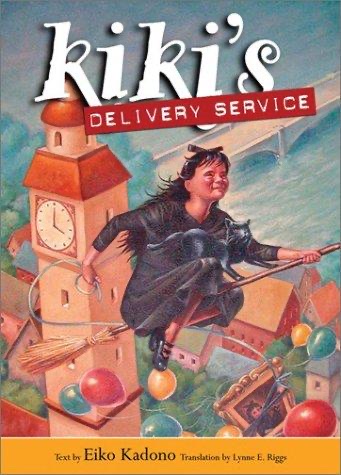
Cover of Kiki's Delivery Service

Kiki's Delivery Service

Eiko Kadono

4 ideas

  1. A thirteen-year-old witch's first independent year

    By witch custom, Kiki leaves home at thirteen on a full-moon night with her black cat Jiji. She must settle alone for a year in a town that has no witch. She lands in the seaside town of Koriko, where people are initially cool to her, and Osono, the baker's wife, gives her a room above the bakery. There she starts a flying delivery service, and after a year of small, sometimes botched jobs she visits home and then chooses to return to Koriko, which has become her own town.

  2. Payment as sharing, not price

    Kiki doesn't charge fixed fees. She asks customers to give 'a little share' of whatever they can, such as bread, a coat, or food. This makes each transaction the start of a relationship, so her income depends on the goodwill she builds rather than on market rates. Her business becomes a way of putting down roots in a strange town as much as a way of earning money.

  3. Build livelihood from your single remaining skill

    In the book, witches' magic has faded over generations, and Kiki can do only one thing: fly on a broom. Instead of mourning the lost powers, she asks what that one ability can be useful for, and she turns flying into a delivery service. The book's view is that independence comes from matching a narrow real capability to a local need, not from having broad talent.

  4. Belonging accrues through small repeated errands

    Kiki's loneliness in Koriko doesn't end in one breakthrough moment. It wears down gradually through a series of ordinary deliveries, and each job adds one more person who knows her. Seen this way, homesickness and isolation are the normal cost of the early phase of independence, and the cure is showing up to do small useful work until the town knits around you.

Save and mark ideas in the app