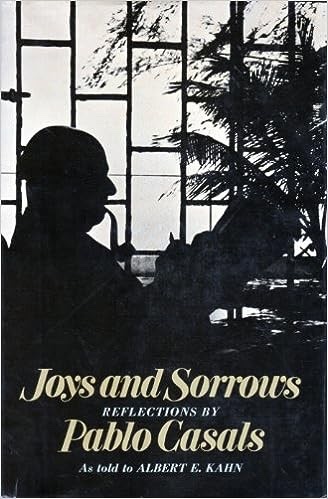
Cover of Joys and Sorrows

Joys and Sorrows

Pablo Casals with Albert Kahn

4 ideas

  1. Thirteen-year-old finds Bach's forgotten cello suites

    Around 1890, the 13-year-old Casals was browsing a secondhand music shop near the Barcelona harbor with his father and found a worn edition of Bach's six suites for solo cello, then regarded as dry technical studies. He practiced them privately every day for about twelve years before he dared to perform one in public. His later performances and recordings turned them into core concert repertoire, which shows how a neglected work can be recovered through one person's long private devotion rather than through scholarly consensus.

  2. An artist's silence can be moral protest

    Casals held that an artist is first a human being and owes loyalty to conscience before career, so refusing to perform is itself a political act. After Franco won the Spanish Civil War he went into exile in Prades, France. When the Allies left Franco in power after 1945, he stopped performing in countries that recognized the regime, deliberately withholding his art as the only leverage he had.

  3. Daily ritual as renewal of wonder

    Each morning Casals played Bach preludes and fugues at the piano before doing anything else, calling it a benediction on the house. He treated the ritual as a way to meet the world freshly each day, not as practice for performance.

  4. Fidelity to spirit over rigid tradition

    Casals rejected playing Bach and other composers in the dry, metronomic way that convention demanded. He argued that faithfulness to a composer means recovering the living feeling in the notes, including natural variety in phrasing and tempo, not reproducing inherited habits. Seen this way, 'tradition' is often just accumulated bad habits, and real interpretation requires reading the source directly.

Save and mark ideas in the app