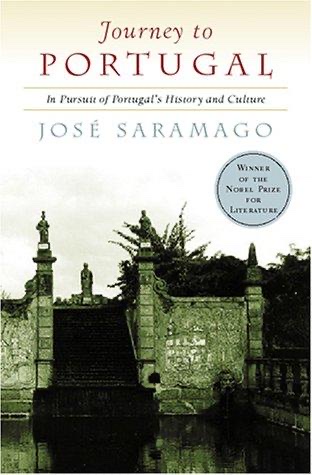
Cover of Journey to Portugal

Journey to Portugal

José Saramago

4 ideas

  1. Preaching to Fish at the Border

    Saramago opens the journey at the Spanish-Portuguese frontier. The traveller stops on the Douro dam near Miranda do Douro and delivers a sermon to the fish below, echoing Saint Anthony's legendary preaching to fishes. He tells them the water they swim in belongs to no nation, so the book begins by treating the political border as an arbitrary human line imposed on a continuous landscape.

  2. Journeys End Only When Travellers Do

    Saramago closes by asserting that a place is never exhausted by one visit. You have to return to see in spring what you saw in summer, by day what you saw by night, and what you missed the first time. The end of one journey is only the start of the next, because seeing is always partial and time keeps changing both the place and the person looking.

  3. Narrating Yourself as 'The Traveller'

    Saramago writes his own trip in the third person, as a character called 'the traveller', rather than as a confessional 'I'. The distance lets him watch himself: his moods, his prejudices, his fatigue and irritation all become objects of observation and irony. The act of seeing becomes as much the subject as the thing seen.

  4. Monuments Belong to Their Anonymous Makers

    Before a church, carving or castle, the traveller looks past the kings, bishops and patrons who commissioned it. He asks instead about the unnamed stonemasons, carvers and labourers whose hands actually made it. Heritage read this way becomes a record of common people's skill and labour, not a trophy of the powerful who put their names on it.

Save and mark ideas in the app