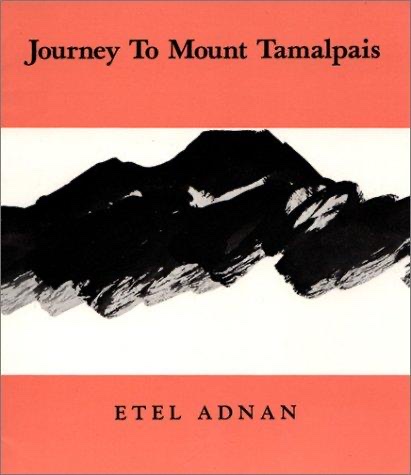
Cover of Journey to Mount Tamalpais

Journey to Mount Tamalpais

Etel Adnan

6 ideas

  1. Repeated looking makes the familiar unfamiliar

    Returning to the same mountain day after day does not exhaust it; it reveals that the mountain is never the same object twice, because light, weather and the viewer's state keep changing. Sustained attention to a single subject increases rather than decreases its strangeness, so depth comes from repetition, not from variety of subjects.

  2. The mountain as an event, not an object

    Adnan treats Tamalpais less as a fixed mass than as a happening: fog arriving, light shifting, colors appearing and dissolving. Seeing a landmark as a continuous event in time rather than a stable thing in space changes what a painter records, from shape to passage and mood.

  3. Color as a form of thought

    Color is not decoration added to form but a way the world thinks through the eye, carrying emotion and meaning directly without passing through words. For the painter, choosing a color is an act of cognition that registers a relationship to the landscape rather than merely copying its appearance.

  4. A landscape can become a companion

    Long devotion to one place turns it into a presence one lives alongside, something closer to a friend or a spiritual interlocutor than scenery. For an exile moving between Lebanon and the United States, this bond with a single mountain supplies a center of gravity that nationality and residence do not.

  5. Perception as participation, not observation

    The viewer is not outside the landscape recording it; looking changes the looker, and the mountain partly exists through the relationship formed by attention. Painting therefore documents an encounter between two presences rather than representing a detached object.

  6. Fragmentary writing to match fragmentary seeing

    Adnan writes in short, discontinuous notes because perception itself arrives in flashes, intervals and sudden recognitions rather than in continuous argument. Matching the form of writing to the rhythm of experience preserves the immediacy that a smoothed, linear essay would erase.

Save and mark ideas in the app