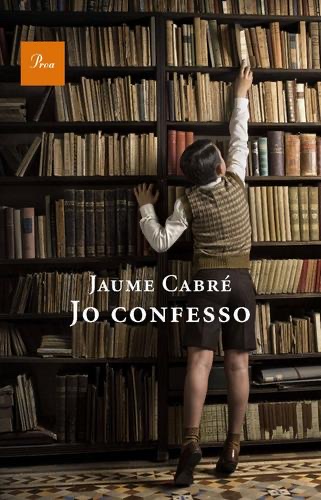
Cover of Jo confesso

Jo confesso

Jaume Cabré

4 ideas

  1. The Storioni violin's chain of blood

    Adrià Ardèvol, the son of a Barcelona antiques dealer, inherits an eighteenth-century Storioni violin. His father Fèlix acquired it through dubious dealings in goods plundered from victims of the Holocaust. As his memory fails, Adrià traces the instrument's provenance backward through Nazi Auschwitz, the Inquisition and the monastery and forest where its wood was cut, and he finds a killing or an act of cruelty attached to almost every transfer of ownership.

  2. Beautiful objects carry their provenance's crimes

    An artwork or precious object is not morally neutral. The violence used to obtain it travels with it, and each new owner who enjoys it without asking where it came from becomes complicit. The instrument's beauty does not redeem that history; it makes the history easier to ignore.

  3. Collapsing centuries into one sentence

    The narration shifts between narrators, eras and grammatical persons in the middle of a sentence. An Inquisitor, a Nazi doctor and a modern dealer end up speaking in the same breath. This technique presents evil not as separate historical episodes but as one continuous human practice that simply changes costume across the centuries.

  4. Confession racing against memory loss

    Adrià writes his confession while dementia is erasing him. The act of confessing becomes a way to fix a self and a family's guilt in writing before memory dissolves them. The confession is addressed to a lost beloved, which turns an intellectual inquiry into the problem of evil into a personal accounting of what one owes the dead.

Save and mark ideas in the app