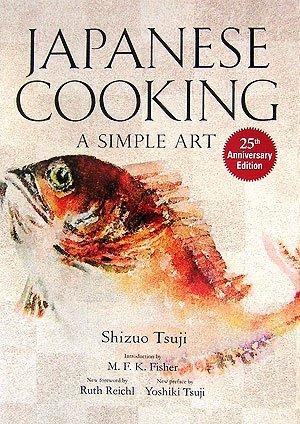
Cover of Japanese Cooking: A Simple Art

Japanese Cooking: A Simple Art

Tsuji Shizuo

3 ideas

  1. Dashi as fast extraction, not reduction

    Japanese stock gets its savory depth from a brief extraction of kombu and dried bonito flakes. It is not built by long simmering. Kombu is pulled from the water just before it boils, and the bonito is steeped only briefly, because longer heat releases bitterness and slime that muddy the stock. The first-extraction 'ichiban dashi' goes to clear soups, and the spent ingredients are re-simmered into a stronger 'niban dashi' for simmered dishes.

  2. The cut determines taste, not just appearance

    Tsuji argues that knife work is a flavor technique. A sawing or pressing cut bruises the flesh and dulls its taste. Because raw preparations have no sauce or heat to hide damage, the quality of the cut is the dish.

  3. Seasonality as timing within a season

    Japanese cooking splits each ingredient's availability into three phases: the first arrival (hashiri), the peak (shun), and the final lingering (nagori). Each phase calls for different handling and carries a different meaning at the table. A menu signals the moment through ingredients, garnishes, and tableware chosen to anticipate or recall a season, so the cook is working on a calendar as much as with flavor.

Save and mark ideas in the app