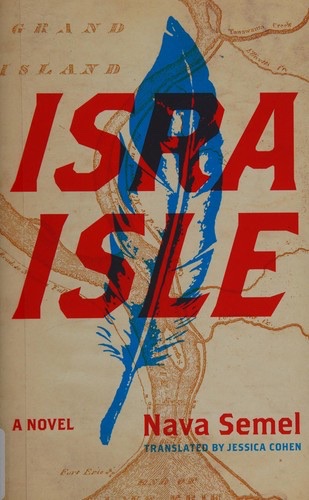
Cover of Isra-Isle

Isra-Isle

Nava Semel

3 ideas

  1. Noah's Ararat Cornerstone Laid in Buffalo

    In September 1825, Mordecai Manuel Noah, a New York Jewish politician and playwright, proclaimed Ararat, a 'city of refuge' for the world's Jews on Grand Island in the Niagara River. Because no boat could take the crowd to the island, the ceremony and the laying of the cornerstone were moved to St. Paul's Episcopal Church in Buffalo, and no settlers ever came. The novel starts from this real failure and imagines that Ararat succeeds, so the Jewish homeland becomes an American island state and the State of Israel is never founded.

  2. Lost Tribes Theory as Moral Alibi

    Noah believed that Native Americans descended from the Ten Lost Tribes of Israel, which let the Jewish settlers treat the indigenous people as long-lost kin rather than as people being displaced. The novel shows how a theory of shared ancestry can soften or excuse a land claim: if the dispossessed are 'family,' the settler's arrival can be told as a reunion instead of a taking.

  3. Counterfactual Exposes Contingency of Homeland

    Imagining a successful Jewish state on a river island near Niagara Falls makes the choice of Zion look like one historical accident among several, not the only possible destiny. Once readers see a plausible alternative, they have to ask which parts of national identity come from the land itself and which are stories told afterward to make the outcome feel inevitable.

Save and mark ideas in the app