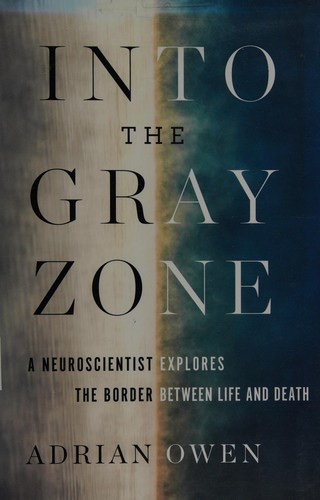
Cover of Into the Gray Zone

Into the Gray Zone

Adrian Owen

4 ideas

  1. Scott Routley answers he is not in pain

    Scott Routley, a Canadian man diagnosed as vegetative for over a decade after a car crash, was asked questions inside an fMRI scanner in 2012 and told to imagine tennis for 'yes' and walking through his house for 'no'. When asked whether he was in pain, he answered 'no'. It was the first time a patient in this state reported on his own experience, after years in which his doctors assumed there was no one there to ask.

  2. Mental imagery as a yes/no channel

    Imagining swinging a tennis racket reliably activates the supplementary motor area, while imagining walking through your home activates the parahippocampal gyrus. Because these regions are anatomically distinct and the tasks need sustained, deliberate effort, a patient can map one image to 'yes' and the other to 'no'. Willful brain activity then works as a binary communication channel that needs no movement at all.

  3. Behavioral diagnosis systematically misses hidden consciousness

    Bedside diagnosis of the vegetative state depends on observing purposeful movement, so any patient who is aware but cannot move gets labeled unaware. Owen's scanning found that roughly 15–20% of patients diagnosed as vegetative could follow commands with their brain activity alone. Absence of evidence of awareness in behavior is therefore not evidence that awareness is absent.

  4. The gray zone between life and death

    The gray zone is the population of patients whose outward behavior shows no awareness but whose minds may be partly or fully intact. Detecting such a person transforms their situation, forcing new decisions about pain management, end-of-life choices, consent, and how carers speak in the room. Proving that someone is 'there' creates obligations that did not exist while they were presumed absent.

Save and mark ideas in the app