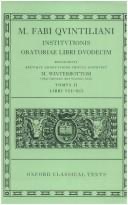
Cover of Institutio Oratoria

Institutio Oratoria

Quintilian

3 ideas

  1. The orator must be a good man

    Quintilian defines the ideal orator as vir bonus dicendi peritus, 'a good man skilled in speaking,' and argues that moral goodness belongs to the definition itself. His reasons are that eloquence in the hands of the wicked is a weapon turned against society, and that a bad man's divided mind cannot give the sustained, credible attention that great speaking requires.

  2. Group schooling beats private tutoring

    Quintilian argues that a child learns more in a school among peers than with a private tutor at home. Classmates supply emulation, friendly rivalry, and models slightly ahead of the learner that are easier to imitate than an adult master. Public performance also builds the confidence a future speaker needs, and a good teacher's energy rises with a larger audience rather than being diluted.

  3. Five canons of rhetorical composition

    Quintilian organizes the work of making a speech into five sequential tasks: inventio (finding the arguments), dispositio (arranging them), elocutio (choosing style and wording), memoria (committing the speech to memory), and pronuntiatio/actio (delivery through voice and gesture). Each is a separate skill that can be trained on its own, which lets a teacher diagnose exactly where a speech fails.

Save and mark ideas in the app