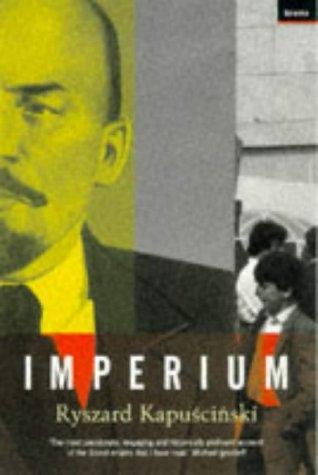
Cover of Imperium

Imperium

Ryszard Kapuściński

4 ideas

  1. Pinsk 1939: a child meets the empire

    In 1939 the Red Army occupied Pinsk in Polish Polesie, and seven-year-old Kapuściński's first experience of the Soviet Union was its arrival. Neighbours were loaded into freight trains and deported east, his school was placed under Soviet rules, and fear and hunger became ordinary.

  2. Read an empire through its borders

    The Soviet state shows itself most clearly at its edges: barbed wire, watchtowers, ploughed strips and endless document checks. A system that treats every boundary as a potential breach puts its energy into sealing and guarding territory, and it treats movement itself as suspect. To understand a closed regime, look at how it handles crossing, entry and exit, not at what it says about itself.

  3. Ideological gigantism destroys what it plans

    Soviet planners diverted the Amu Darya and Syr Darya rivers to grow cotton, and the Aral Sea shrank into a salt desert that poisoned the surrounding population. A central authority that measures success by the scale of its projects and answers to no local feedback will override natural limits until whole ecosystems collapse.

  4. Imperial collapse releases three plagues

    When the Soviet empire broke apart, its suppression of difference did not leave freedom behind in a clean way. It left three dangers: nationalism, racism and religious fundamentalism. Communities that had been frozen under one imposed identity reached for ethnic and religious identities to fill the vacuum, and those identities often turned hostile to one another.

Save and mark ideas in the app