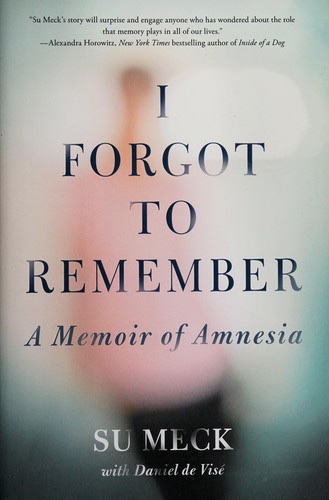
Cover of I Forgot to Remember

I Forgot to Remember

Su Meck

4 ideas

  1. Ceiling fan erases a young mother

    In 1988, a ceiling fan fell and struck 22-year-old Su Meck in the head, leaving her with severe amnesia: she did not recognize her husband or her two young sons, and she had lost her past and much of her basic knowledge of how to live. She was sent home after a few weeks, relearned daily life largely by imitation, and years later enrolled in college, eventually transferring to Smith College. Her case shows that a person can go on functioning as a wife and mother without any autobiographical memory of becoming one.

  2. Social roles can outrun inner identity

    After losing her memory, Meck returned to the roles of wife and mother before she had any felt sense of being either. She performed them by copying the cues and routines of the people around her. Her case suggests that a role can be carried out convincingly from the outside while the self it is supposed to express is still missing. It also suggests that onlookers may read competent performance as recovery and so stop offering help.

  3. Family silence as a recovery obstacle

    Meck's family largely avoided talking about the accident and its effects and pushed toward normal life instead. Seen this way, the kindness of 'moving on' can cut an injured person off from explanation, grieving and the chance to ask what was lost. Her struggles stayed hidden because the family never named them, not because they were resolved.

  4. Self as rebuilt, not recovered

    Meck never got her pre-accident memories back. The person who emerged was assembled from new experiences, choices and education rather than restored to an earlier version. Recovery in this sense means building a new self with its own history, not reclaiming the old one. Returning to college works as the act by which she authors that self rather than inheriting it.

Save and mark ideas in the app