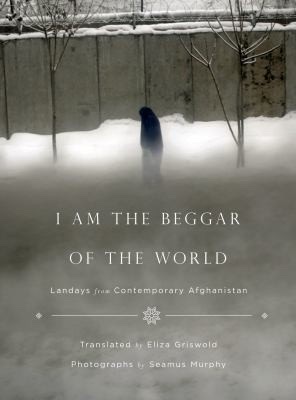
Cover of I Am the Beggar of the World

I Am the Beggar of the World

Eliza Griswold

4 ideas

  1. The landay's fixed folk-poem form

    A landay is a two-line Pashto folk poem of twenty-two syllables, nine in the first line and thirteen in the second, usually ending on a 'ma' or 'na' sound. It is sung aloud, often to a drum, and no individual owns it. Because the form is so short and fixed, it can be memorized, altered, and passed along orally by people who cannot read or write.

  2. Anonymity lets the powerless speak dangerously

    Landays belong to no author and are reshaped by each person who repeats them, so no one can be punished for them. This lets women in a society that polices their speech express forbidden things: desire, contempt for husbands, mockery of male cowardice, and grief over war. The collective form works as cover for individual dissent.

  3. Ancient forms absorb modern technology and war

    The old two-line structure stays the same while its subject matter keeps changing, taking in drones, mobile phones, Facebook, and American soldiers. Reading the poems this way shows living folk culture as a technology for making sense of the present, not a relic. The form stays put while its content keeps moving.

  4. The girl who recited poems by phone

    A teenage girl in Helmand, forbidden to write poetry, secretly phoned a Kabul women's literary society called Mirman Baheer to recite her poems. Her family beat her after discovering her love poems, and she set herself on fire and died. Her case shows that for Afghan women, making poetry can be an act of real risk, and that phones can become lifelines for voices silenced at home.

Save and mark ideas in the app