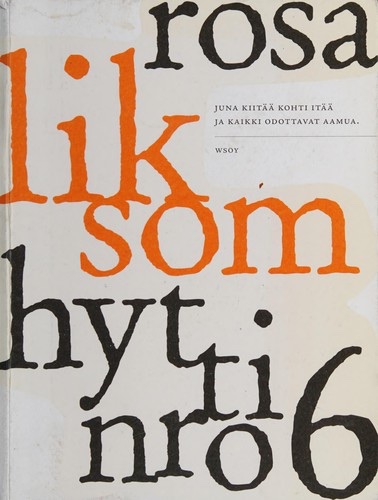
Cover of Hytti nro 6

Hytti nro 6

Rosa Liksom

4 ideas

  1. Finnish student and Russian labourer share compartment

    In the late-1980s USSR an unnamed young Finnish archaeology student leaves Moscow, where she has been entangled with a young man, Mitka, and his mother, Irina, and boards the Trans-Siberian for Ulan Bator. She shares compartment six with Vadim, a middle-aged Russian construction worker who drinks vodka, boasts, and tells crude, violent stories about women, his past, and the Soviet system. Over thousands of kilometres of Siberia her revulsion and fear turn into a wary, wordless familiarity that neither of them names.

  2. Enforced proximity manufactures intimacy without liking

    A sealed shared space with no exit forces two people into repeated routines such as eating, sleeping, drinking, and waiting. Accumulated exposure builds familiarity and dependence faster than approval does. Intimacy can then form between people who dislike and even fear each other, because closeness is produced by circumstance rather than choice.

  3. Crude men carry an empire's damage

    The labourer's coarseness, drinking, and casual cruelty are shown as the residue of a system that brutalised the people it relied on through labour camps, army service, alcoholism, and broken families. His monologues work as oral history of the Soviet underside. The individual who repels us is also the record of what the state did to him.

  4. Train window as panorama of decay

    A long rail journey turns a country into a moving sequence of glimpses, including rotting towns, polluted landscapes, station hawkers, and frozen emptiness. The traveller sees it all but can touch almost none of it. This detachment lets the observer register a whole empire's decline as an accumulation of fragments rather than through any single argument.

Save and mark ideas in the app