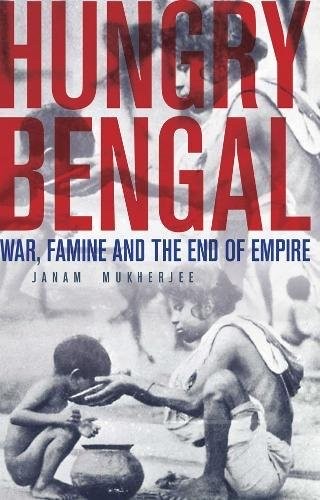
Cover of Hungry Bengal

Hungry Bengal

Janam Mukherjee

6 ideas

  1. Famine as war policy, not scarcity

    The 1943 Bengal famine was caused mainly by wartime state priorities that pulled food away from the rural poor, not by an absolute shortage of rice. The colonial government ranked military supply, defense industries and Calcutta's essential workers above the countryside, so entitlement to food collapsed for millions while grain still existed in the province.

  2. Boat denial destroys the delta economy

    Fearing a Japanese invasion after Burma fell in 1942, authorities confiscated or destroyed tens of thousands of country boats in coastal Bengal so an invader could not use them. In a riverine delta where boats carried rice, fish, labor and trade, this cut fishermen, boatmen and farmers off from income and markets. It turned a military precaution into a local economic collapse before the famine peaked.

  3. Denial policy as preemptive self-destruction

    A denial policy removes or destroys resources, such as rice stocks and transport, that an expected enemy might capture. Its costs fall at once and with certainty on the local population, while its benefit depends on an invasion that may never come. This makes civilian subsistence expendable to a hypothetical threat.

  4. Requisitioning and priority buying fuel price spirals

    Government rice requisitioning and bulk purchases for the army and 'priority' urban workers pulled grain off the open market and signaled scarcity. Traders then hoarded and speculated, and prices rose beyond what landless laborers and artisans could pay. Official procurement therefore helped create the market panic that priced the poor out of food.

  5. Calcutta's streets as the famine's visible edge

    Destitute villagers poured into Calcutta seeking food, and people dying on the city's pavements made the rural collapse visible at the center of colonial power. Reading the famine through the streets shows the gap between the protected wartime city, where workers were fed through controlled distribution, and the unprotected migrants who starved beside them. It shows how rationing systems drew a line between people who counted and people who did not.

  6. Famine trauma fed later communal violence

    The dislocation of 1943, including mass death, land loss, profiteering and the collapse of rural social bonds, left Bengal economically and politically broken. That breakdown helped set the conditions for the 1946 Calcutta riots and the violence of Partition. Mass starvation is therefore a cause of later political fracture, not an isolated humanitarian episode.

Save and mark ideas in the app