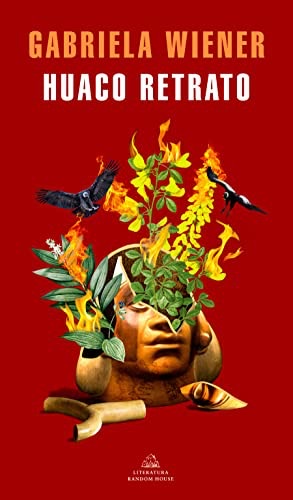
Cover of Huaco retrato

Huaco retrato

Gabriela Wiener

4 ideas

  1. Descendant confronts her explorer ancestor's looted collection

    Peruvian writer Gabriela Wiener visits the Musée du quai Branly in Paris and finds among its Peruvian holdings pieces brought to France by her great-great-grandfather Charles Wiener, a 19th-century Austrian-French explorer who removed thousands of pre-Columbian objects from Peru. Standing before Moche huaco retrato portrait vessels, she sees faces resembling her own and her family's, so the looted objects become at once stolen heritage and a family mirror. The episode sets the descendant of the colonizer and the descendant of the colonized inside a single person.

  2. Proud family myth as inherited colonial ideology

    A family that proudly traces itself to a European 'discoverer' is also preserving that ancestor's racial hierarchy, because the prestige of the lineage depends on ranking the European founder above the Indigenous ancestors whose names went unrecorded. Reading the family tree this way shows the pride and the erasure are the same act: the celebrated white branch is visible precisely because the brown branches were treated as not worth recording.

  3. Colonial racism lives on as internalized desire

    The racial scale colonizers built to classify and measure Indigenous bodies does not stay in old books and vitrines. It resurfaces in the descendants as desire and shame: which bodies they find beautiful, which partners they choose, how they see their own brown faces. Decolonizing therefore has to happen at the level of intimacy and self-image, not only through museums returning objects.

  4. Grief as excavation of a father's secrets

    After her father dies, the author learns he kept a long hidden relationship and a parallel life. Her mourning becomes a kind of archaeology that mirrors her great-great-grandfather's grave-opening. Digging up the dead to learn the truth repeats the extractive act she condemns, so the book links private betrayal and colonial plunder as two forms of taking what was buried.

Save and mark ideas in the app