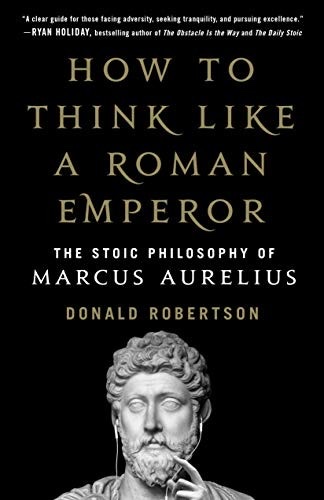
Cover of How to Think Like a Roman Emperor

How to Think Like a Roman Emperor

Ancient Rome · 121–180

3 ideas

Buy on Amazon

The life of Marcus Aurelius retold by a cognitive-behavioural therapist, showing how Stoic exercises anticipated CBT and teaching readers to practise them on anger, fear, pain, desire and death.

  1. Cognitive distancing through separating impressions from judgments

    Stoics distinguished the raw impression (phantasia) of an event from the value judgment we add to it, and trained themselves to say 'this is only an impression, not the thing it claims to be.' By noticing the judgment as a thought rather than a fact, the emotional charge weakens before assent is given.

  2. The View from Above perspective exercise

    The practitioner imagines rising above their current situation until they can see their city, then the Earth, then vast stretches of time, holding the present worry against that scale. This shrinks the apparent importance of fame, insults and petty desires, and it also shows the self as one part of a single interconnected whole. Marcus used it to loosen attachment and to reframe his troubles as tiny parts of a larger natural order.

  3. Treating anger as temporary madness

    Marcus met provocation by examining the offender's character and remembering that people do wrong out of ignorance of good and bad. He also reminded himself that he had made similar mistakes and that both parties would soon be dead. He counted the delay itself as a remedy, because anger fades under reflection while its consequences often last longer than the cause.

Save ideas and give them a thumbs up or down in the app