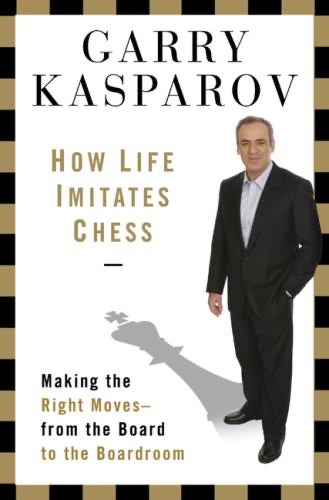
Cover of How Life Imitates Chess

How Life Imitates Chess

Garry Kasparov

6 ideas

  1. Material, time, and quality as trade-offs

    Every position can be judged on three currencies: material (tangible assets), time (tempo, how fast you can act), and quality (structural soundness of your position). They can be exchanged for one another, for example sacrificing material to gain time or accepting a worse structure for extra resources. Good decisions come from knowing which currency matters most in the current situation rather than hoarding whichever is easiest to count.

  2. Strategy knows goals, tactics know moves

    Strategy is the long-term direction set by your goals and values. Tactics are the concrete, calculable actions taken when the position offers an opportunity. A tactician without strategy reacts well but drifts, while a strategist who neglects tactics loses to immediate threats. The two must be kept distinct and deliberately linked.

  3. A plan is not a prediction

    A plan commits you to a direction and to criteria for judging moves. A prediction is a bet on what the opponent or the world will specifically do. Treating a plan as a prediction makes you brittle, because once events diverge you have nothing left. A good plan holds its objectives steady while expecting the concrete path to change.

  4. Intuition is compressed experience, so stop calculating

    Intuition is pattern recognition built from thousands of analysed positions. It lets a player trim the tree of possible moves to a few candidates instead of calculating everything. Past a certain point, extra analysis produces doubt and time pressure rather than better moves. Mature decision-makers learn when to trust the gut and commit.

  5. Losing the title to Kramnik's preparation

    In the 2000 world championship match, Kramnik neutralised Kasparov's attacking openings with the solid Berlin Defence, and Kasparov lost his title without winning a game. Kasparov attributes the loss partly to complacency built on years of success: he had kept playing his established approach instead of rethinking it. His lesson is that wins need scrutiny as much as losses.

  6. Initiative is worth more than safety

    The player who holds the initiative forces the opponent to react, which narrows the opponent's options and multiplies their chances of error. Choosing passive, safe moves hands this pressure to the other side. Kasparov argues it is often worth taking calculated risks, including material sacrifices, to seize and keep the initiative.

Save and mark ideas in the app