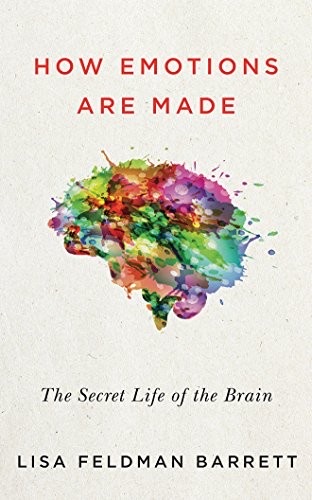
Cover of How Emotions Are Made

How Emotions Are Made

Lisa Feldman Barrett

6 ideas

  1. Emotions are constructed, not triggered circuits

    No dedicated neural circuit or fingerprint exists for anger, fear, or sadness; meta-analyses find instances of the same emotion vary widely in facial movement, physiology, and brain activity. Each emotion is built in the moment by the brain combining general-purpose networks (interoception, concepts, control), so an emotion category is a population of variable instances, not a single essence.

  2. The predicting brain simulates before sensing

    The brain does not react to the world but continuously predicts incoming sensations from past experience, then corrects those predictions with prediction error. What you feel and perceive is largely the brain's best guess, which is why emotions can feel like they happen to you even though your brain constructed them.

  3. Body budgeting drives affect

    A core job of the brain is allostasis: anticipating and allocating the body's resources like water, glucose, and salt before they are needed. The felt summary of this interoceptive budgeting is affect, simple pleasantness or unpleasantness plus arousal, which is present in every waking moment and forms the raw material that concepts shape into specific emotions.

  4. Emotional granularity as a trainable skill

    People who have more finely distinguished emotion concepts, telling apart 'irritated,' 'aggrieved,' and 'disappointed' rather than just 'bad,' construct more precise emotions and regulate better, with links to less binge drinking, aggression, and doctor visits. Granularity can be built by learning new emotion words, including words from other languages, and by deliberately recategorizing sensations.

  5. The lunch date that was flu

    Barrett describes feeling a flushed face and fluttering stomach on a date with a colleague she did not find attractive, and she concluded she felt attracted to him. She went home and vomited because she had the flu. The same bodily sensations were categorized as romantic interest because of the situation, which shows how context and concepts turn ambiguous interoception into a specific emotion.

  6. Emotion recognition is culturally learned, not universal

    Classic studies that appeared to show universal recognition of facial expressions relied on forced-choice word lists that gave subjects hints. When isolated groups such as the Himba sort faces freely, the 'universal' categories do not appear. Emotion concepts are social reality that children learn through language and culture, not innate expressions detected the same way everywhere.

Save and mark ideas in the app