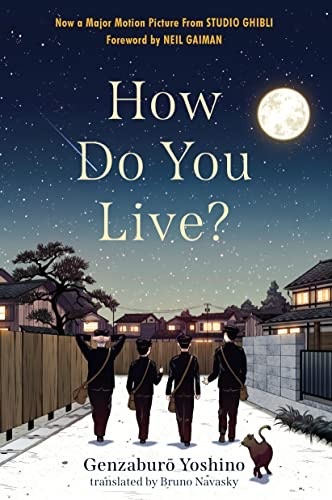
Cover of How Do You Live?

How Do You Live?

Genzaburō Yoshino

4 ideas

  1. Copernican shift away from self-centered perspective

    Looking down from a department-store roof at crowds reduced to tiny moving specks, Copper realizes he is one such speck in someone else's view. The uncle calls this a Copernican turn: children naturally treat themselves as the fixed center around which everything revolves. Maturity means relocating yourself as one moving body among countless others, so you can judge situations without self-interest distorting what you see.

  2. The invisible network of human production

    These ties are relations of material exchange, not of love or friendship. The uncle presents this as a real, discoverable structure of society that reveals mutual dependence beneath apparent independence.

  3. Copper's broken promise in the snow

    Copper and his friends Kitami, Mizutani and Uragawa pledge to stand together if older judo-club boys attack Kitami. On his uncle's advice he writes the friends an honest letter of apology, and they forgive him, which shows that a moral failure can be repaired through direct confession rather than excuses.

  4. Remorse is evidence of moral capacity

    The uncle argues that the pain of recognizing one's own wrongdoing is itself proof of the ability to choose rightly, because humans suffer over mistakes only when they judge themselves against a standard they could have met. Animals and those without that standard feel no such regret. Guilt should therefore be treated as a signal of freedom and responsibility and used to act, not as a reason for despair.

Save and mark ideas in the app