Beirut's nineteenth-century leap from backwater port
Around 1800 Beirut was a small walled town of roughly 6,000 people, overshadowed by Sidon, Acre and Tripoli. By the First World War it had grown past 100,000 inhabitants.
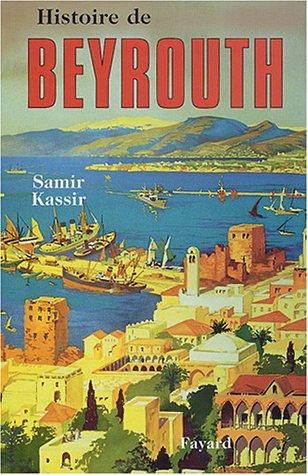
4 ideas
Around 1800 Beirut was a small walled town of roughly 6,000 people, overshadowed by Sidon, Acre and Tripoli. By the First World War it had grown past 100,000 inhabitants.
Beirut's cosmopolitanism is usually credited to Western missionaries, consuls and capital. Kassir argues instead that local Christian and Muslim merchants, printers, journalists and educators turned those foreign inputs into an Arab modernity of their own. The city's presses, newspapers and schools made it a centre of the Nahda, the Arabic cultural renaissance, which makes it a producer of modernity rather than a colonial outpost of it.
Read the city's history as a sequence of breaks rather than an unbroken line from Phoenician Berytus to the present. The Roman law school and city were wrecked by the earthquake of 551, and centuries of marginality followed. Seeing those ruptures dissolves the foundation myths, Phoenician or Arab, that rival communities use to claim that the city truly belongs to them.
After the civil war, rebuilding the destroyed downtown was handed to Solidere, a single real-estate company. Owners and tenants received shares in exchange for their property rights, and most of the damaged fabric was cleared. This turned the old centre, which had been the one mixed space shared across sects, into a controlled commercial zone. It erased both the physical memory of the war and the popular uses that had made the centre common ground.