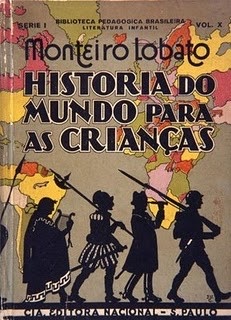
Cover of História do Mundo para as Crianças

História do Mundo para as Crianças

Monteiro Lobato

4 ideas

  1. Grandmother's evening history lessons at the farm

    On successive evenings at the Sítio do Picapau Amarelo, Dona Benta tells world history in chronological order, from the Earth's formation and early humans through ancient empires to modern times, to Pedrinho, Narizinho, the rag doll Emília and the corncob Visconde. The children interrupt, argue, and pass judgment on kings and conquerors, so the history reaches the reader through a family conversation. The book adapts an American children's history, commonly attributed to van Loon although V. M. Hillyer's A Child's History of the World is the closer source, and replaces its narrator with a Brazilian grandmother.

  2. Irreverent child voice as critical device

    Authority is split between an adult narrator who supplies the facts and a child, usually Emília, who openly mocks what those facts show about adults. This turns a lecture into a debate and teaches young readers that received accounts can be questioned.

  3. Wars and conquerors deserve scorn, not glory

    The narration treats most wars as foolish, wasteful quarrels of vanity and greed. Famous conquerors are presented as destroyers whose 'greatness' the children should question, not admire. Progress is credited instead to inventors, thinkers and the gradual spread of knowledge.

  4. Civilization ladder with Europeans at the top

    The book ranks peoples on a single scale from 'savage' to 'civilized,' with Europeans and their descendants at the summit. Africans, Indigenous peoples and others are cast as backward or picturesque rather than as historical actors. This racial hierarchy, typical of its era, is built into the book's story of progress, so reading its history critically means reading that hierarchy as an assumption, not a finding.

Save and mark ideas in the app