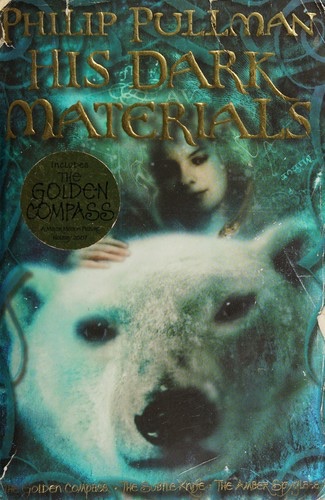
Cover of His Dark Materials

His Dark Materials

Philip Pullman

4 ideas

  1. Intercision at Bolvangar severs children's daemons

    The Church-backed General Oblation Board kidnaps children and takes them to an Arctic station, Bolvangar, where it cuts them away from their daemons with a silver guillotine. The aim is to stop Dust from settling on them at puberty.

  2. The daemon as an externalized soul

    In Lyra's world every person's soul lives outside the body as a talking animal companion, a daemon. In childhood it shifts shape freely, and at adolescence it settles into one fixed form that reflects the person's character. This makes identity visible and relational: a person cannot stray far from their daemon without pain, and the settling marks the move from open possibility to a defined self.

  3. Consciousness and experience are sacred, not sinful

    Dust is a set of conscious particles that gather on adults and on things made with skill and thought. The Church reads Dust as physical evidence of original sin. The trilogy argues the reverse: the Fall, meaning the gaining of knowledge, desire and self-awareness, is what makes creatures fully alive, and an authority that tries to stamp it out in order to keep people 'innocent' is suppressing the very thing that gives the universe meaning.

  4. Build the Republic of Heaven here

    The Authority is exposed as a decrepit angel who falsely claimed to be the creator, and he dies. The trilogy then refuses to put a better heaven in his place. Meaning has to come from building a 'Republic of Heaven' in the world we actually live in, through curiosity, kindness and honest work. Lyra and Will choose to separate forever and close the windows between worlds, accepting a loss that keeps Dust from draining away, rather than holding on to personal happiness.

Save and mark ideas in the app