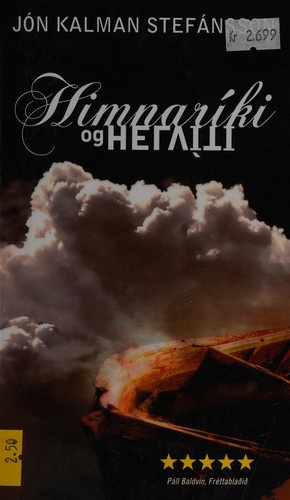
Cover of Himnaríki og helvíti

Himnaríki og helvíti

Jón Kalman Stefánsson

4 ideas

  1. Bárður freezes after forgetting his waterproof

    Around 1900, on a Westfjords fishing station, the young fisherman Bárður is so absorbed in memorising lines of Milton's Paradise Lost that he rows out without his waterproof jacket. A storm hits the open boat and he freezes to death in front of his crewmates, including his friend, the unnamed boy. The boy then crosses the mountains in winter to return the borrowed book to its blind owner in the village, undecided whether to keep living.

  2. Poetry's value weighed against survival

    The novel holds two claims in deliberate tension: words and poetry are what make a harsh subsistence life bearable and human, and in a world where one forgotten garment is lethal, attention given to beauty can kill. It resolves neither. Bárður's death is both an indictment of the distraction and a testament to how much the lines mattered to him.

  3. Environment as the enforcer of consequence

    In a pre-modern subsistence setting there is no margin for error: cold, sea and weather turn small lapses of memory or judgment into death within hours. Morality and habit there are shaped less by rules than by a physical world that punishes any inattention immediately and irreversibly, so carefulness becomes a form of survival ethics.

  4. Grief as a choice between following and continuing

    The survivor's mourning is framed not as sadness to be processed but as a live decision: whether to follow the dead into death or accept the obligation to go on living. The boy's physical task of carrying the book across the mountains acts as a bridge, a duty that keeps him moving until the wish to live can return, which casts small concrete obligations as the scaffolding that carries the bereaved through suicidal grief.

Save and mark ideas in the app