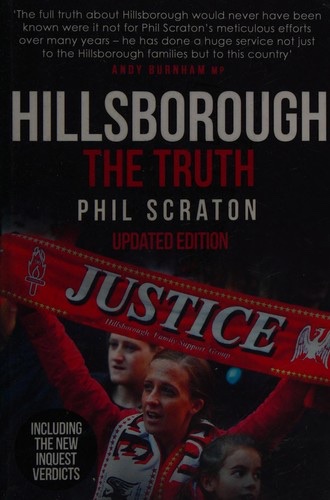
Cover of Hillsborough: The Truth

Hillsborough: The Truth

Phil Scraton

5 ideas

  1. Opening Gate C Into Overcrowded Pens

    With a dangerous crush building at the Leppings Lane turnstiles, the match commander ordered exit Gate C opened. He did not close the tunnel leading to central pens 3 and 4, which were already full, so thousands of fans funnelled straight into fenced enclosures with no way out. He then told officials that fans had forced the gate, and that false account set the frame for the blame that followed.

  2. Review and Alteration of Officers' Statements

    After the disaster, officers' handwritten recollections went through a review process run by force management and its solicitors before submission to the inquiries. In that process, passages criticising command decisions, radio failures and the lack of leadership were removed or softened. The official evidentiary record was produced by an institution editing the testimony against itself, so what later inquiries treated as raw evidence was already a curated defence.

  3. The 3:15 Cut-Off Narrowed Accountability

    The coroner ruled that all victims had suffered fatal injuries by 3:15pm, so evidence about events after that time was excluded. This procedural boundary kept the inquests from examining the failed emergency response, the ambulances held outside and the lack of medical triage. Scraton argues that how an inquiry defines its scope decides in advance which failures can be found.

  4. Fans Framed as Threat, Not Victims

    Policing in 1980s football treated supporters as a hooligan problem to be contained, with perimeter fences, pens and a crowd-control mindset rather than crowd safety. This frame made officers first read the crush as a pitch invasion. It also drove the aftermath: blood-alcohol tests on the dead, including children, and press stories of drunk, ticketless, looting fans. Once a group is pre-classified as a threat, evidence of its suffering is reinterpreted as evidence of its guilt.

  5. Institutionalised Denial Through Official Discourse

    State agencies, the police, the coroner's court and sympathetic media each produce accounts that reinforce one another. Together they form an official truth that carries more credibility than survivors' and bereaved families' testimony. Denial here is not one lie but a cumulative process of selective evidence, legal procedure and repeated narrative that makes the powerful version the default record.

Save and mark ideas in the app