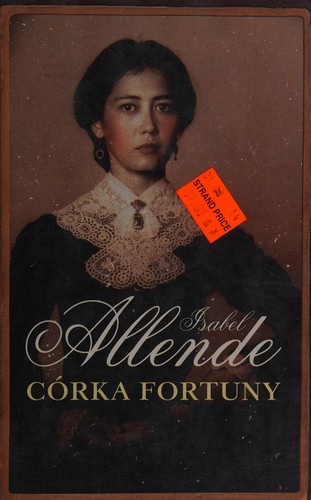
Cover of Hija de la fortuna

Hija de la fortuna

Isabel Allende

4 ideas

  1. Eliza Sommers follows Joaquín to California

    Eliza is a foundling left on the doorstep of the English Sommers siblings in 1830s Valparaíso and raised between Miss Rose's Victorian propriety and the Mapuche cook Mama Fresia's folk knowledge. At sixteen she becomes pregnant by the clerk Joaquín Andieta, who leaves for the 1849 California gold rush, so she stows away in a ship's hold with the help of the Chinese cook and healer Tao Chi'en and miscarries during the voyage. In California she spends years searching for Joaquín, disguised as a boy, and the novel ends with her looking at a preserved head displayed as that of the bandit Joaquín Murieta and declaring herself free, never confirming whose head it is.

  2. Male disguise as a key to freedom

    Eliza dresses as a boy, passing as 'Elías' or 'Chile boy' and as Tao Chi'en's deaf-mute Chinese brother. The disguise lets her travel alone, earn wages, and move through camps, brothels and saloons in ways her own sex would forbid. Because a change of clothes alone opens these doors, the novel shows that the limits on women are enforced by how others read her body, not by anything she lacks.

  3. Pursuing an absent lover builds the self

    The quest for an idealized, mostly absent beloved changes the seeker far more than it ever brings back the beloved. Eliza's years of searching for Joaquín force her to become competent, independent and rooted in a real bond with Tao Chi'en. By the time the search could end, its object no longer matters, and the obsession is revealed as a means of self-discovery that must be outgrown to be complete.

  4. Frontier chaos dissolves inherited social identity

    Treat a lawless boomtown as a solvent for class, race and gender scripts. In Valparaíso the English colony enforces reputation through gossip, secrecy and hidden pasts, like Miss Rose's concealed scandal.

Save and mark ideas in the app