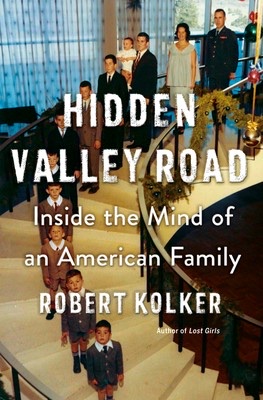
Cover of Hidden Valley Road

Hidden Valley Road

Robert Kolker

4 ideas

  1. The Galvins: Twelve Children, Six Schizophrenic

    Don and Mimi Galvin raised twelve children, ten boys and two girls, born between 1945 and 1965 in Colorado Springs; six of the sons were eventually diagnosed with schizophrenia. The family hid the illness behind an image of Catholic, military-officer respectability while enduring violence, hospitalizations, and a 1973 murder-suicide by son Brian. From the 1980s, researchers including Lynn DeLisi of NIMH and Robert Freedman of the University of Colorado collected the family's genetic material, making them one of the most-studied multiplex families in schizophrenia research.

  2. Blaming Mothers Delayed Understanding of Schizophrenia

    Mid-century psychiatry, shaped by psychoanalysis and ideas like Frieda Fromm-Reichmann's "schizophrenogenic mother," explained psychosis as a product of cold or controlling parenting. The theory produced guilt and secrecy in families, discouraged the sharing of family histories that genetic research needed, and pushed treatment toward talk therapy aimed at a supposed family pathology. The field's institutional commitment to one causal story made biological evidence slower to be accepted.

  3. Sensory Gating and Prenatal Choline Prevention

    Robert Freedman's research linked schizophrenia to a failure of sensory gating: the brain normally dampens its response to a second, repeated click, measured as the P50 wave, but many patients and their relatives do not. He tied this deficit to the alpha-7 nicotinic receptor gene (CHRNA7). He then reasoned that choline supplementation during pregnancy could strengthen that receptor pathway in the developing fetal brain, which shifted the goal from treating psychosis after onset toward preventing vulnerability before birth.

  4. Mental Illness Harms the Whole Family System

    The book treats the illness as a force that reorganizes an entire family, not only the diagnosed individuals. In the Galvin family, parental attention went to the sick sons, abuse by an ill brother went unaddressed, and the healthy siblings, especially the youngest daughters Margaret and Mary (later Lindsay), grew up with neglect, fear, and dread that they might become ill themselves. Measuring the illness only by patient outcomes leaves out the lasting trauma carried by the people who never received a diagnosis.

Save and mark ideas in the app