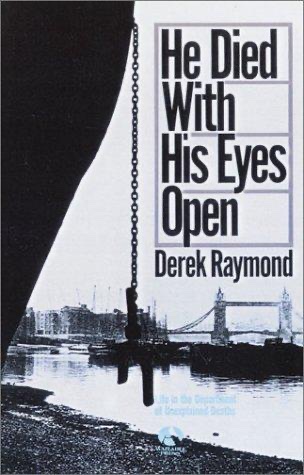
Cover of He Died with His Eyes Open

He Died with His Eyes Open

Derek Raymond

4 ideas

  1. Charles Staniland's death on the wasteland

    Charles Staniland, a middle-aged alcoholic and failed writer from a respectable family, is found savagely beaten to death on waste ground in west London. The recordings lead the sergeant to Barbara Spark, the woman Staniland loved, and to the circle of people responsible for his killing.

  2. Solving a death by becoming the victim

    The sergeant's method is not forensic deduction but deep identification: he listens to the dead man's voice until he understands how Staniland thought, felt and chose. The book suggests that the killer can only be found once the victim is fully known as a person. That same empathy exposes the investigator to the victim's despair and pulls him toward the same danger.

  3. Institutions rank the dead by social worth

    The police hierarchy assigns attention to deaths by the victim's status, so the killings of drunks, drifters and bedsit dwellers go to a despised backwater unit that careerists avoid. The sergeant deliberately stays in that unit and refuses advancement, holding that an unnoticed person's death deserves the same rigor as an important one. On this view, neglecting the obscure dead is a moral judgment disguised as allocating resources.

  4. Lucid self-destruction as vulnerability to predators

    Staniland watches his own decline with unsparing clarity. He records his failures and the love he knows is ruinous, yet he does not stop. His refusal to lie to himself about his need for others makes him easy prey for people who live by manipulation and have no such honesty. Seeing clearly protects no one if you still walk toward what destroys you, and the self-deceiving can exploit that openness.

Save and mark ideas in the app