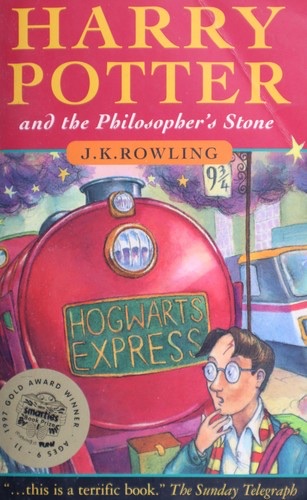
Cover of Harry Potter and the Philosopher's Stone

Harry Potter and the Philosopher's Stone

J. K. Rowling

4 ideas

  1. Lily's sacrifice leaves protective mark on Harry

    When Voldemort attacked the Potters, Lily Potter died shielding her infant son, and her voluntary self-sacrifice left a protection in Harry's skin that makes Voldemort's curse rebound and later burns Quirrell's hands when he touches Harry. Dumbledore explains that love this deep leaves its own mark, one that someone full of hatred and greed cannot bear to touch. The book's central plot thus rests on an act of love working as a literal defensive force.

  2. The Stone yields only to non-use

    Dumbledore hides the Philosopher's Stone inside the Mirror of Erised so that only someone who wants to find the Stone but not use it can retrieve it. Harry gets it because he wants only to keep it from Voldemort. The safeguard filters by the motive of the person seeking it, not by skill, so the power goes only to someone who does not want it for himself.

  3. The Mirror shows desire, not truth

    The Mirror of Erised shows the viewer's deepest desire. Harry sees his dead family and Ron sees himself as head boy and Quidditch captain. Dumbledore warns that men have wasted away before it, unsure whether what they saw was real or even possible. Seen this way, fixating on an image of what you lack can take the place of living, and 'it does not do to dwell on dreams and forget to live.'

  4. Standing up to friends takes greater courage

    At the end of the House Cup, Dumbledore awards Neville Longbottom the deciding points for trying to stop Harry, Ron and Hermione from sneaking out. He explains that it takes great bravery to stand up to our enemies, but just as much to stand up to our friends. The book treats resisting people you belong to as a real form of courage, one that costs social safety instead of physical safety.

Save and mark ideas in the app