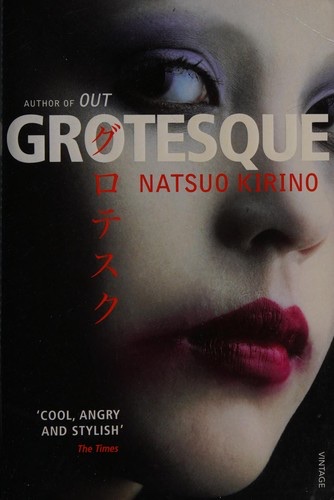
Cover of Grotesque

Grotesque

Kirino Natsuo

4 ideas

  1. Elite graduates who became murdered streetwalkers

    The unnamed narrator's sister Yuriko, a half-Swiss girl whose extraordinary beauty defines her, and the narrator's classmate Kazue Sato, a relentless striver, both attend the elite Q High School for Young Women in Tokyo. The story is told mostly by the resentful sister, with interleaved journals and a confession from the accused Chinese migrant, Zhang.

  2. Meritocratic striving cannot buy entry to inherited status

    At the escalator school, girls who entered from the internal track by birth and wealth hold unspoken rank over those who tested in, and no amount of grades, effort or imitation of their style closes the gap. Kazue's belief that diligence earns belonging is repeatedly humiliated, and her later life shows that a woman who played by merit's rules still ends up valued only as a body. The novel presents elite institutions as sorting machines that reward performance but reserve acceptance for pedigree.

  3. Prostitution as seizing the terms of objectification

    For Yuriko and Kazue, selling sex is framed as a way to put an explicit price on a sexual value that a patriarchal economy already assigns them, turning an imposed judgment into a transaction they control. Read this way, the 'fall' reveals the underlying logic of women's worth rather than departing from it.

  4. The unreliable narrator's malice as self-portrait

    The narrator presents herself as the clear-eyed truth-teller while her account seethes with envy of her beautiful sister and contempt for everyone around her. The embedded diaries and confessions contradict her, so the reader must triangulate between biased testimonies to reconstruct events. The mechanism is that a narrator's judgments of others end up exposing her own wounds more precisely than they describe the people she judges.

Save and mark ideas in the app