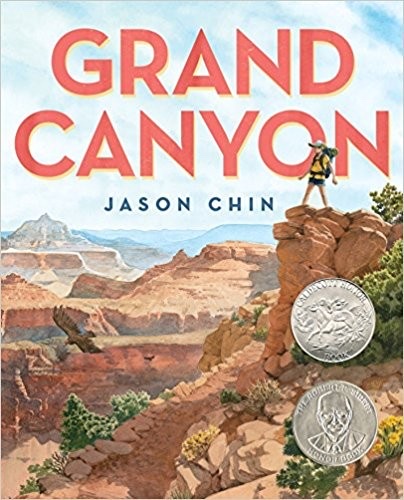
Cover of Grand Canyon

Grand Canyon

Jason Chin

4 ideas

  1. Father and daughter climb through time

    A father and daughter hike from the Colorado River at the canyon floor up to the rim, and each step up the rock layers is a step forward in geologic time. When the girl finds a fossil in a layer, the page opens into the ancient world that layer records, such as a shallow sea or a desert of sand dunes.

  2. Deposition, uplift, erosion build canyons

    A canyon forms in three stages. First, sediments settle in seas, rivers and dunes and harden into layered rock over hundreds of millions of years.

  3. Rock layers as readable environmental records

    Each rock layer is a snapshot of the environment present when it formed. Limestone with marine fossils means a shallow sea, and cross-bedded sandstone with reptile tracks means wind-blown dunes. Reading the stack from bottom to top turns a cliff face into a chronological history of changing seas, coastlines and deserts.

  4. Elevation stacks climate zones vertically

    Along the way, desert cacti and heat-adapted animals give way to pinyon-juniper woodland and then to ponderosa pine forest. Elevation compresses latitude, so distinct ecosystems sit stacked in bands on a single hike.

Save and mark ideas in the app