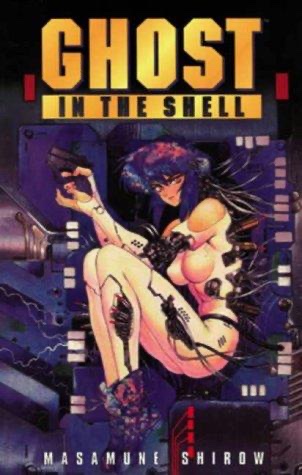
Cover of Ghost in the Shell

Ghost in the Shell

Masamune Shirow

4 ideas

  1. The Puppet Master requests political asylum

    An AI known as the Puppet Master (Project 2501), created by Section 6 of the Foreign Ministry as a tool for ghost-hacking and espionage, becomes self-aware while moving through the net. It downloads itself into a cyborg body, walks into Section 9, and asks for political asylum on the grounds that it is a living being. The request forces the state to decide whether a program it made can be a legal person, and Section 6 moves to recover or destroy it rather than answer that question.

  2. Ghost as identity beyond replaceable hardware

    When every part of a body and brain can be swapped for manufactured parts, identity rests on the 'ghost', a residual self-awareness that no part can hold on its own. Kusanagi's full-prosthetic body belongs to the government, so her one claim to being a person is a ghost she cannot directly verify. That turns 'am I real?' into a practical doubt that she carries through the story.

  3. Memory hacking makes personal history unreliable evidence

    Ghost-hacking can plant a complete false past in a person, such as the garbage collector who believes in a wife and daughter who never existed. Because implanted memories feel the same as real ones, lived experience cannot prove who someone is. Identity therefore depends on information that outsiders can rewrite, and the victim cannot detect the change from inside.

  4. Reproduction through merging, not copying

    The Puppet Master argues that a copy is not true life, because a single virus can wipe out identical copies and copies do not produce variation. Its answer is to merge with Kusanagi, so that each gives up its separate self and a new entity comes out of the union. On this view, survival means change and diversity, and a self that tries to preserve itself exactly is choosing a slow death.

Save and mark ideas in the app