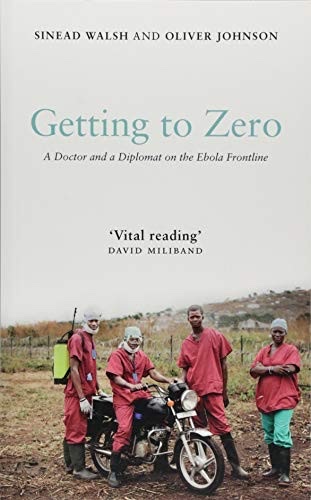
Cover of Getting to Zero

Getting to Zero

Sinead Walsh and Oliver Johnson

4 ideas

  1. Holding Connaught Hospital's Front Door

    As Ebola reached Freetown in 2014, Oliver Johnson's small King's Sierra Leone Partnership team helped staff at Connaught, the city's main referral hospital, improvise screening and isolation with almost no equipment or trained staff, while national and international systems were still slow to act. Health workers were infected and some died, which showed that a hospital without triage and infection control can amplify an epidemic instead of containing it. The episode is a concrete test case for what frontline institutions can and cannot do before large-scale help arrives.

  2. Epidemics Expose Pre-Existing Health System Weakness

    Ebola spread so far in Sierra Leone mainly because the health system was already hollow: very few doctors, no routine infection prevention, weak surveillance, and little public trust. The virus did not create these gaps but exploited them. Emergency funding that builds temporary treatment beds without fixing that underlying capacity leaves the country just as exposed to the next outbreak.

  3. Transmission Chains Break in Communities, Not Wards

    Getting to zero cases depended less on treatment-centre capacity than on changing household and community behaviour: safe and dignified burials, early reporting of sick people, and contact tracing. These measures worked only when local leaders and communities trusted them and helped run them. Imposing them by top-down enforcement bred concealment, which kept transmission hidden.

  4. Honest Outsider View of Aid Politics

    Pairing a diplomat's view of donor coordination with a doctor's view from the ward shows that the international response was shaped by institutional incentives, national reputations, and fear for foreign staff as much as by need. Once the outsiders admit their own position and limits, it becomes easier to see where foreign agencies sidelined local actors, slowed decisions, or claimed success. The lens asks who is deciding, on what information, and in whose interest.

Save and mark ideas in the app