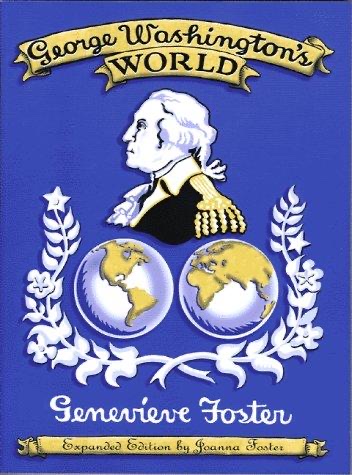
Cover of George Washington's World

George Washington's World

Genevieve Foster

4 ideas

  1. Horizontal History Across Simultaneous Lives

    Instead of tracing one nation vertically through centuries, take a single span of years and cut across every continent to show what monarchs, scientists, artists and explorers were doing at the same moment. Juxtaposition shows that events usually taught in separate courses, such as Frederick the Great's wars, Mozart's childhood, Captain Cook's voyages and Qianlong's China, were contemporaries sharing one world.

  2. One Lifespan as the Chronological Clock

    Divide a historical era into chapters keyed to one familiar person's life stages: boyhood, young surveyor and soldier, planter, general, president. Each global event is then located by that person's age at the time. A known biography becomes a memory scaffold on which unfamiliar foreign events can be hung and recalled relative to one another.

  3. Backwoods Skirmish That Ignited a World War

    In 1754, 22-year-old Lieutenant Colonel George Washington led Virginia militia and Native allies in an ambush of a French party at Jumonville Glen in the Ohio Country. The French commander Jumonville was killed. The clash escalated into the French and Indian War and then the Seven Years' War, which was fought in Europe, India, Africa and on the oceans, a case of a minor frontier incident cascading into global conflict.

  4. Distant Revolutions Are Causally Chained Together

    Events in separate countries during an era drive one another. France's defeat in the Seven Years' War motivated it to finance the American Revolution to weaken Britain. A national history told in isolation misses the cross-border debts, rivalries and ideas that actually move it.

Save and mark ideas in the app