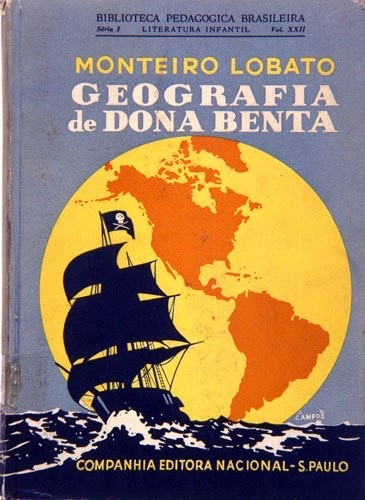
Cover of Geografia de Dona Benta

Geografia de Dona Benta

Monteiro Lobato

4 ideas

  1. The imaginary voyage around the world

    Dona Benta takes Pedrinho, Narizinho, the rag doll Emília, the corncob Visconde de Sabugosa and Tia Nastácia on a make-believe sea voyage around the globe, and each port becomes a lesson on that region's landforms, peoples, products and customs. Brazil is the starting point, and the rest of the world is described from the deck by comparison with the familiar sítio. The trip is openly imaginary, and the children's willingness to pretend is what holds the tour together.

  2. Interruption-driven dialogue as the lesson engine

    The lesson moves forward through the listeners' questions, jokes and objections rather than through the teacher's exposition. The irreverent doll Emília mocks, doubts and derails, and her interruptions make Dona Benta restate each fact in concrete, comparative terms a child can hold. The skeptic is written into the class as the engine of the lesson.

  3. Geography as how peoples live, ranked

    The book treats geography as the study of how human groups live in their environments rather than as a list of capitals and rivers. That framing lets environment explain culture, but it also lets the narration rank peoples on a scale of 'civilization.' The ranking carries the era's racist stereotypes, especially in portraying Africans and in how the Black cook Tia Nastácia is treated. The same explanatory frame that makes the material vivid is what delivers the prejudice.

  4. Didactic fiction inherits its sources' worldview

    When a children's author retells secondhand history in a trusted grandmother's voice, the source's selections and biases pass on unexamined, now with the authority of family intimacy. To judge what such a book teaches, trace where its 'facts' came from.

Save and mark ideas in the app