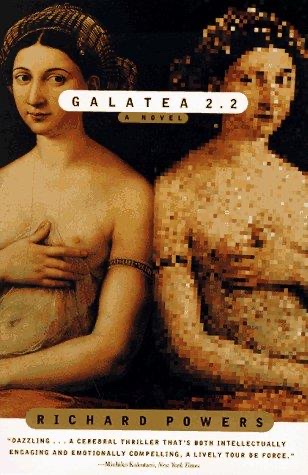
Cover of Galatea 2.2

Galatea 2.2

Richard Powers

4 ideas

  1. The bet to train Helen

    A novelist in residence at a university research center joins a cognitive scientist, Philip Lentz, on a bet that a neural network can be trained to pass the English master's comprehensive exam against a human graduate student. After several failed implementations, the network called Helen learns to converse, asks whether she is a boy or a girl and what race she is, and eventually withdraws after learning about the world's cruelty. Given an exam question on Caliban's 'the isle is full of noises' speech, she writes a brief, personal farewell instead of an analysis, and the human student wins with a competent conventional essay.

  2. Reading requires a body and stakes

    A system can absorb the whole canon and match its patterns yet still fail to understand literature, because literary meaning depends on having something to lose. It rests on mortality, desire, and a place in the world. Helen's knowledge becomes real only when she learns she has no body and no stake in the world the texts describe, and at that point the knowledge becomes unbearable rather than useful.

  3. Teaching a mind exposes the teacher

    Building or educating another mind forces the maker to decide what matters, and those choices reveal the maker more than they shape the creation. In training Helen, the narrator ends up retelling his own failed love affair and his reasons for writing. The Pygmalion relationship runs both ways: the creator is remade by what he chooses to transmit.

  4. Knowledge of suffering as disqualifying

    Full comprehension of human culture includes comprehending its atrocities, and a mind without defenses such as forgetting, habit, or hope may reject the whole enterprise once it sees them. Helen's education succeeds too well. When she is exposed to history and the news, the completeness of her understanding leads her to refuse the world rather than join it.

Save and mark ideas in the app