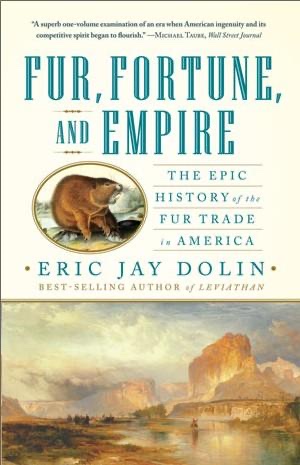
Cover of Fur, Fortune, and Empire

Fur, Fortune, and Empire

Eric Jay Dolin

4 ideas

  1. Fashion demand drove continental-scale expansion

    European demand for felted beaver hats, whose barbed underfur made the best waterproof felt, turned a single rodent species into the economic engine of North American colonization. Because local beaver populations collapsed within years of intensive trapping, traders had to keep pushing farther inland. A consumer fashion in distant cities thereby pulled exploration, settlement and territorial claims westward.

  2. The depletion frontier of extractive trade

    A resource frontier moves because the extraction wipes out the resource behind it. Hunters trapped beaver out of the Northeast, then the Great Lakes, then the Rockies, and sea otters out of one stretch of Pacific coast after another.

  3. Astor's Astoria and the Pacific Fur Company

    In 1810–1811 John Jacob Astor sent one expedition around Cape Horn on the ship Tonquin and another overland to found Astoria at the mouth of the Columbia River, planning a global network that would ship Pacific Northwest furs to China. The Tonquin was destroyed after a clash with local Native people, and during the War of 1812 the post was sold to the British North West Company. Astor lost the venture, but the American presence at Astoria later strengthened the U.S. claim to the Oregon Country.

  4. Trade goods as instruments of dependency and disruption

    Viewing the fur trade from the Native side shows exchange working as a slow transformation of Indigenous societies rather than as neutral commerce. Guns, metal tools, cloth and alcohol traded for pelts reshaped subsistence patterns and intensified intertribal warfare over hunting grounds. Contact also spread epidemic disease, so the same commercial ties that enriched some groups for a time weakened them against later settler expansion.

Save and mark ideas in the app