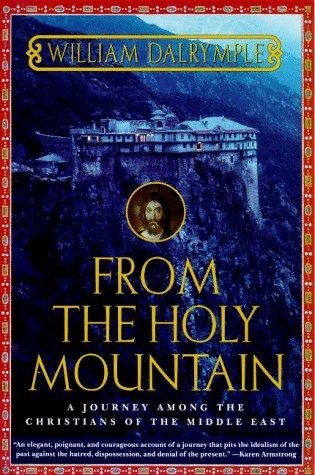
Cover of From the Holy Mountain

From the Holy Mountain

William Dalrymple

4 ideas

  1. Tur Abdin's Syriac Christians caught between fires

    In the Tur Abdin plateau of southeastern Turkey, Dalrymple finds the ancient Syriac Orthodox monasteries, including Mar Gabriel, nearly emptied. Their communities still speak a form of Aramaic, the language of Christ, but are trapped between the Turkish army and PKK Kurdish guerrillas during the 1990s conflict.

  2. Islamic devotion descends from Eastern Christian practice

    Early Islam absorbed much of its devotional form from the Eastern Christian world it conquered. Prostration in prayer, structured fasting and the ascetic holy man all have precedents in Byzantine and Syriac monasticism.

  3. Christian survival depended on minority-ruled secular regimes

    Middle Eastern Christians fared better where a secular state was run by another minority, as in Assad's Alawite-dominated Syria. Such regimes had a self-interested stake in protecting other minorities from the Sunni majority. Where rising nationalism or Islamism set the terms, as in 1990s Turkey and Upper Egypt, Christians faced pressure and violence, and emigration hollowed out their communities faster than any single massacre.

  4. Eastern churches as living fossils of antiquity

    The book treats surviving Levantine Christian communities as fossilized remnants of late antique Christianity. Their liturgies, languages, monastic routines and icon cults are practiced almost unchanged from the world Moschos described in the sixth century. Seen this way, each vanishing village is an irreplaceable record of the religion's original Eastern form, not a quaint minority. The Byzantine collapse before Persian and Arab invasions also mirrors the modern exodus as a second ending of the same civilization.

Save and mark ideas in the app