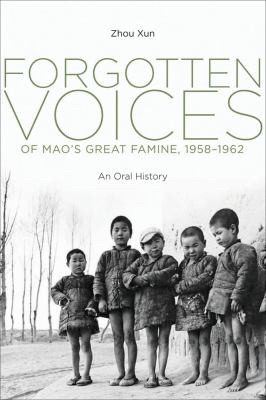
Cover of Forgotten Voices of Mao's Great Famine

Forgotten Voices of Mao's Great Famine

Zhou Xun

4 ideas

  1. Local cadres, not just distant policy, killed

    Survivors describe mass death as driven less by Beijing's abstract targets than by village and commune cadres who controlled the canteen ladle. Because the collective canteen made food a tool of discipline, the people who ran it decided who ate, and withholding rations became the everyday way to punish, coerce, and kill.

  2. Inflated quotas trigger lethal procurement spirals

    Cadres reported impossible harvest yields to show loyalty. The state then took grain based on those fictional figures, so the actual harvest was seized, and villages were accused of hoarding the grain that never existed. Searches, beatings, and confiscation of seed grain followed, turning a statistical lie into physical starvation.

  3. Oral testimony as counter-archive to official silence

    When the state controls documents and forbids public memory, individual spoken recollection becomes the only surviving record of how events were lived. Hearing both victims and perpetrators in their own words exposes survival strategies, complicity, and moral compromise that aggregate death statistics erase.

  4. Survival through theft, foraging, and moral collapse

    Survivors recount eating bark, grass, and mud, stealing from fields at night, abandoning or selling children, and in some cases eating the dead. These accounts show extreme hunger dissolving family and community bonds, so that surviving usually meant breaking rules or harming others, a guilt many carried silently for decades.

Save and mark ideas in the app