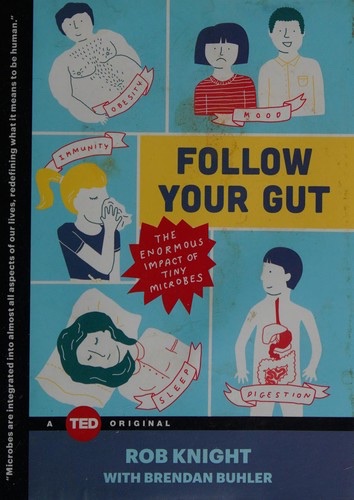
Cover of Follow Your Gut: The Enormous Impact of Tiny Microbes

Follow Your Gut: The Enormous Impact of Tiny Microbes

6 ideas

Buy on Amazon
  1. Microbial Cells Outnumber Human Cells

    The human body carries roughly as many or more microbial cells than its own cells, and these microbes contribute vastly more genes than the human genome does. By this accounting, a person is better understood as a composite ecosystem than as a single organism.

  2. Early Microbial Exposure Trains Immunity

    The infant immune system calibrates itself through early contact with diverse microbes, so overly sterile environments correlate with higher rates of allergies, asthma, and autoimmune conditions. The book presents this as a strong association consistent with the hygiene hypothesis, not as a proven single cause.

  3. Birth Mode Seeds the Microbiome

    Babies delivered vaginally are first colonized by the mother's vaginal and fecal microbes, while cesarean babies are colonized instead by skin and hospital microbes. This differing initial seed is associated with different later health outcomes, prompting experimental vaginal swabbing of C-section newborns.

  4. Antibiotics Cause Collateral Ecological Damage

    Antibiotics kill beneficial gut bacteria alongside pathogens, disrupting the microbial community in ways that can take a long time to recover and may not fully return to baseline. The book argues this collateral damage carries underappreciated long-term costs, especially from early-life or repeated courses.

  5. Fecal Transplant Cures C. Diff

    Transplanting stool from a healthy donor into patients with recurrent Clostridium difficile infection restores a functioning gut community and resolves the infection at rates far exceeding antibiotics. This demonstrates that transferring an entire microbial ecosystem, not a single drug, can reset a diseased gut.

  6. Gut Microbes As Metabolic Partners

    Gut bacteria perform digestive and metabolic work the human body cannot, breaking down fibers, synthesizing vitamins, and producing compounds that influence weight and energy extraction. Viewing digestion as a collaboration between host and microbes reframes diet as feeding an ecosystem rather than just the person.

Save ideas and give them a thumbs up or down in the app