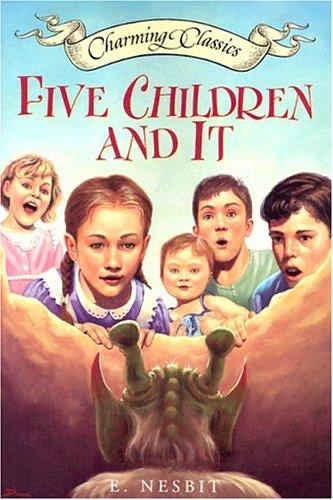
Cover of Five Children and It

Five Children and It

United Kingdom · 1902

4 ideas

Buy on Amazon

In Edwardian England, five siblings discover a sand-fairy that grants one wish a day. The wishes wear off at sunset, but each gives the children a full day of trouble in a world that carries on as usual. Nesbit's narrator speaks directly to readers as the children's bright ideas meet ordinary life.

  1. The gold wish nobody would accept

    The children wish to be 'rich beyond the dreams of avarice,' and the gravel pit fills with gold. The baker and the carriage-hirer treat the children as thieves, Robert is taken before a policeman, and they end the day hungry and in disgrace until the gold vanishes at sunset.

  2. Windfalls fail inside unchanged social systems

    A granted wish changes one thing and leaves the surrounding world untouched, and that world rejects the anomaly. Beauty makes the children unrecognizable to their own household, so they are locked out. Gold without a credible source reads as theft, and wings strand them on a church tower. The trouble comes from the mismatch between a sudden private gain and the institutions that must recognize it, not from the magic itself.

  3. The sunset reset as safe failure

    Every wish expires at sunset, so each disaster is vivid but bounded. The next day they can try again, having learned something. This reversibility lets the children run repeated experiments on desire at low cost, and each failure refines what they ask for next.

  4. Narrator speaking to children as equals

    The narrator addresses the child reader directly, with confiding asides and a shared joke about adults. It assumes the reader can handle irony and real consequences without being moralized at. This treats children as intelligent peers, and the comedy and the lessons land because they are not announced.

Save ideas and give them a thumbs up or down in the app