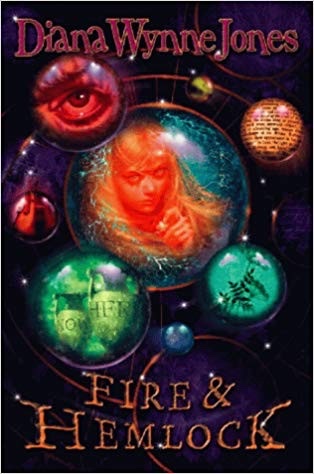
Cover of Fire and Hemlock

Fire and Hemlock

Diana Wynne Jones

4 ideas

  1. Polly's Two Memories and Tom Lynn

    At nineteen, Polly Whittacker notices that a picture on her wall no longer matches what she remembers, and realizes she holds two sets of memories. Polly must reconstruct the erased years before the next sacrifice to save him.

  2. Invented Stories That Become Real

    Tom and Polly invent a shared heroic fantasy with alter egos who do brave deeds, and the details they make up start happening in the real world, often in distorted or dangerous forms. Imagination here is not escapism. It is a causal force, and whatever you narrate you may later have to live through and pay for.

  3. Memory as an Editable Record

    The book treats memory as a text that can be overwritten, so the present can feel coherent while resting on a falsified past. Its evidence of tampering is small inconsistency: an object that doesn't fit, a book title that has changed, a gap no one explains. Following those anomalies, rather than trusting the felt continuity of the self, is how the true history is recovered.

  4. Rescue Through Relinquishing Your Claim

    In the ballad, the heroine saves her captive lover by holding on to him. Polly instead frees Tom by renouncing him completely, because the queen's hold works through the bond itself: whatever Polly clings to becomes something that can be taken or bargained for. Giving up possession removes the leverage, so letting go can be the only effective act of love.

Save and mark ideas in the app