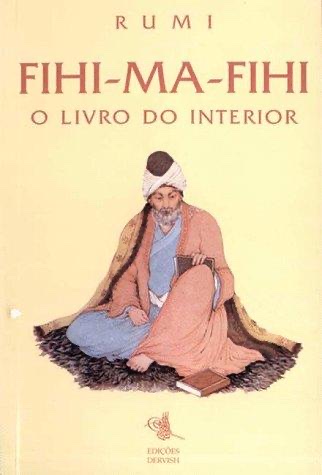
Cover of Fihi ma fihi

Fihi ma fihi

Rumi

5 ideas

  1. The scholar who visits the prince

    Rumi takes the saying 'the worst of scholars visits princes, the best of princes visits scholars' and inverts its surface meaning. What matters is who needs whom, not who travels. A true scholar who goes to the prince's court is still the one being visited, because the prince comes to him in need. A worldly scholar who stays home is still the visitor, because his learning is aimed at the prince's favor.

  2. The one task that justifies everything

    A king sends a man to a country for one specific errand. If he does a hundred other things there but not that errand, he has done nothing. The human being has a similar particular trust, knowing God, which the heavens and mountains refused to carry.

  3. The beloved is a cup

    When people tell Majnun that other women are more beautiful than Layla, he answers that Layla is a cup and he drinks wine from it. They see only the vessel, not what he drinks. On this view, the value of a person or object lies in what the perceiver receives through it. So an outsider's judgment of the form misses the thing that actually matters.

  4. The human being as God's astrolabe

    Just as a copper astrolabe maps the heavens, the human being contains a map of divine qualities and of the cosmos. But an astrolabe tells nothing to someone who cannot read it.

  5. Words are only a pretext

    What draws one person to another is an inner affinity, not the speech exchanged between them. Words are a pretext and a shadow of that reality: they help when the connection is weak, and fall silent when it is strong. People who share a real inner bond can understand each other with few or no words. People without one will not be joined by any amount of talk.

Save and mark ideas in the app