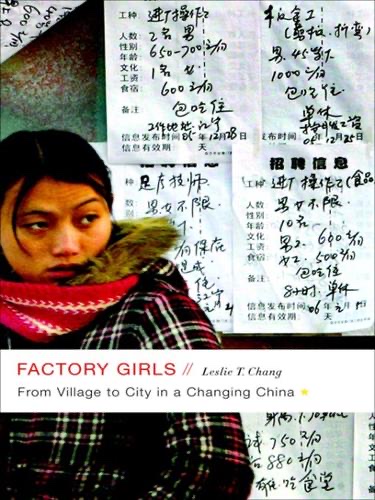
Cover of Factory Girls

Factory Girls

Leslie T. Chang

4 ideas

  1. Migration as self-invention, not victimhood

    Young women leave villages for factory towns not merely out of economic desperation but to escape family authority and arranged futures, and the city lets them remake identity, skills, and ambitions. Framing migrants purely as exploited victims erases their agency: the real story is individuals using job-hopping, lying about qualifications, and constant self-reinvention to climb.

  2. Chuqu: going out as rite of passage

    Chuqu, 'going out,' names the act of leaving the village for the city, and among rural youth it functions as a coming-of-age threshold that separates those who stay stuck from those who become someone. Once out, migrants rarely return permanently, because village life no longer fits the self they built away from it, so the move turns into a one-way identity change rather than a temporary job trip.

  3. Assembly-line success through classes and self-help

    Workers in Dongguan pay for English, computer, and etiquette classes and buy success manuals, treating self-improvement as their way out of the line into office jobs like clerk or sales. The same hunger feeds a scam economy of direct-marketing schemes and shady training courses. Upward mobility is real but depends on relentless self-education in a place with no institutional ladder.

  4. Family history mirrors present-day migration

    The author sets her own ancestors' flight from their village alongside the factory girls' journeys, showing that leaving home to reinvent oneself is a recurring Chinese pattern rather than a new one. Reading today's migrants against earlier generations turns them from statistics of a single economic boom into participants in a long lineage of uprooting, memory loss, and reinvention.

Save and mark ideas in the app