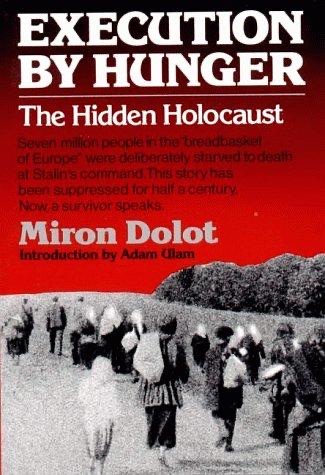
Cover of Execution by Hunger

Execution by Hunger

Miron Dolot

4 ideas

  1. Requisition brigades search one village bare

    In a single central Ukrainian village in 1932–33, brigades of party officials and local activists went house to house probing floors, walls, stoves and gardens with long iron rods to find buried grain. They confiscated grain and also beans, potatoes and other food, leaving families with nothing. By spring 1933, villagers were eating grass, bark and weeds, and neighbors were dying in their homes and on the roads.

  2. Famine produced by confiscation, not crop failure

    The village's starvation followed the removal of food that peasants had grown, not a harvest collapse. Delivery quotas that could not be met, repeated searches and the seizure of all edible reserves meant hunger was the result of state policy. That policy was used to break peasant resistance to collectivization.

  3. Terror carried out by one's neighbors

    The state did not rely only on outside agents. It recruited local activists, often young Komsomol members and the poorest villagers, and gave them power over everyone else. Because they were paid in status or in a share of what they seized, neighbors denounced, searched and dispossessed neighbors. This destroyed the trust that might have made collective resistance or mutual aid possible.

  4. Social death comes before physical death

    The memoir follows the dismantling of the village's world before the famine killed anyone. Private farms were forced into the kolkhoz, so-called kulak families were deported, churches were closed and seasonal customs stopped. Reading famine this way shows how stripping away property, faith and community left people with no structures to survive through when the food was taken.

Save and mark ideas in the app