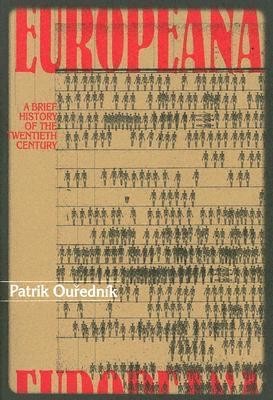
Cover of Europeana

Europeana

Patrik Ouředník

4 ideas

  1. Normandy dead measured end to end

    The book opens by stating that the American soldiers who fell in Normandy in 1944 were tall young men, averaging about 173 cm, and that laid head to toe they would stretch roughly 38 kilometres. Mass death is converted into a trivial measurement exercise and delivered in the same flat tone as a fun fact. This makes the episode a concrete test case for how quantification can empty an event of its meaning.

  2. Flattened juxtaposition collapses moral hierarchy

    Removing the rhetorical cues that normally signal importance shows how much of historical meaning comes from narrative framing rather than from the facts themselves. The reader has to supply the moral weighting that the text withholds, and the discomfort of doing so is the point.

  3. Every ideology promised to finally perfect humanity

    The book recounts nationalism, communism, fascism, eugenics, consumer democracy and postmodernism in turn, and each is presented as believing it had at last found the correct way to organise people and end history. Relating each promise in the same naive, reported voice shows the repetition: every certainty was confidently announced, then produced catastrophe or disappointment, then was replaced by the next. Faith in progress appears as a recurring pattern of belief rather than as a line of improvement.

  4. History as circulating hearsay and cliché

    Much of the text reports what 'people said', what 'some historians thought', or what was generally believed, so rumours, slogans and received opinions sit on the same footing as verified events. This shows collective memory as an accumulation of repeated phrases and half-remembered claims, rather than as the digestion of evidence. What a century 'means' becomes whatever gets said about it most often.

Save and mark ideas in the app