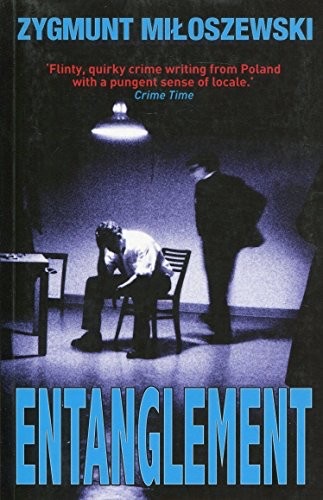
Cover of Entanglement

Entanglement

Zygmunt Miłoszewski

4 ideas

  1. Murder after a Warsaw family-constellation session

    Henryk Telak, a Warsaw businessman, is found dead with a roasting skewer driven into his eye. He is found in a former monastery building where the therapist Cezary Rudzki had just run an overnight Hellinger family-constellation session with a small group of patients. Prosecutor Teodor Szacki starts with the patients and therapist as the obvious suspects, but the case leads back to the communist-era secret police (SB) and networks from that time that outlived 1989.

  2. Family constellations and inherited entanglement

    In Hellinger's family-constellation therapy, strangers stand in for a patient's relatives and report feelings supposedly belonging to the people they represent. The premise is that people unconsciously carry the fates of family members who were excluded, wronged, or dead, and that bringing these hidden bonds into view releases them. The novel treats the method as a strong psychological drama whose revelations cannot be verified, which makes it unreliable as evidence and easy to exploit.

  3. Secret police networks survived regime change

    The communist secret police did not disappear in 1989. Its officers and their informal loyalties carried on in private, informal forms. Compromising files and past collaboration keep people controllable long after the formal institution is gone, so the old system's power continues through leverage rather than through official office.

  4. The obvious suspect circle as a frame

    A closed setting with a small group of people, each carrying a secret, presents investigators with a ready-made suspect list. That list can hide the real cause, which sits in a larger structure outside the room. Treat the tidy boundary of 'who was there' as a possible construction, and ask what history or institution benefits from focusing attention on those people.

Save and mark ideas in the app