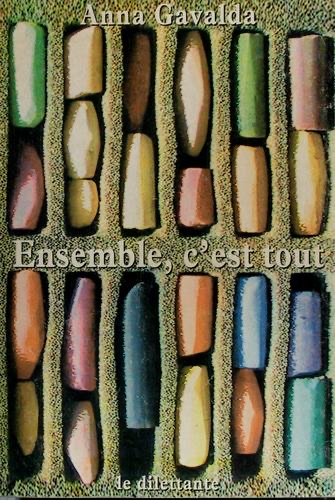
Cover of Ensemble, c'est tout

Ensemble, c'est tout

Anna Gavalda

4 ideas

  1. Four misfits make a Paris flat home

    He takes her in alongside his crude, overworked lodger Franck Lestafier, a cook, and Camille later brings Franck's grandmother Paulette out of the care home she hates to live with them. The household nurses Paulette until her death. In the process Camille starts drawing again, Philibert's stammer eases through theatre classes, and Franck, once hostile to Camille, falls in love with her.

  2. Proximity plus obligation builds family

    Bonds between incompatible people form less from affinity than from forced, repeated physical proximity combined with concrete mutual obligations such as cooking, rent and nursing. Shared routines give people who would never choose each other a reason to stay long enough for tolerance to become attachment. On this account, family is something assembled from daily logistics rather than found by kinship or like-mindedness.

  3. Caring for others restores self

    Each wounded character recovers not by working on themselves directly but by taking responsibility for someone more vulnerable. Camille regains her appetite and her art by tending Paulette, and Franck grows gentler by providing for his grandmother. Through this lens, depression and withdrawal look less like problems of inner insight and more like the absence of anyone who needs you.

  4. Social class masks shared isolation

    The book places an impoverished aristocrat, a working-class cook, a déclassé bourgeois artist and a rural old woman under one roof. It shows that their surface codes of speech, manners and money hide the same condition: each is alone, underused and ashamed. When those markers are stripped away in a shared kitchen, class becomes a costume rather than a barrier.

Save and mark ideas in the app