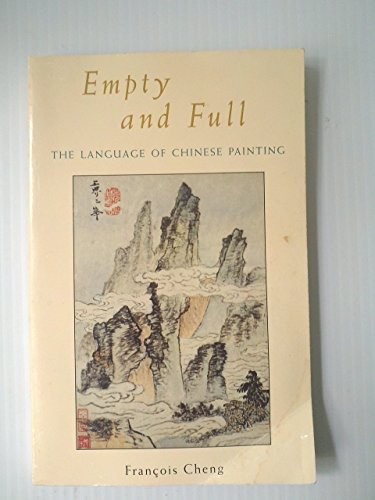
Cover of Empty and Full: The Language of Chinese Painting

Empty and Full: The Language of Chinese Painting

François Cheng

5 ideas

  1. Emptiness as the Space of Circulation

    In Chinese painting, emptiness (xu) is the zone where vital breath (qi) moves between the painted elements and joins them into one living whole. The unpainted silk is not background or absence. It is the medium through which the forms become connected and animated, so removing it would leave inert, isolated objects.

  2. Emptiness Makes Fullness Function

    Painted forms (shi) only gain meaning and life through their relation to unpainted space, the way a hub's empty center lets a wheel turn. Emptiness is therefore not the opposite of fullness but the condition that lets the full operate. A painting crowded to its edges is not richer; it is choked and static.

  3. The Ternary: Yin, Yang, and Middle Void

    Chinese thought treats reality as a three-part structure rather than a binary: yin, yang, and the Middle Void (zhongxu) that lets them interact and transform into each other. In painting this becomes pairs such as mountain and water or brush and ink, animated by a third, empty term. Seeing a pair of opposites without that interstitial void misses the mechanism that generates change.

  4. Clouds as the Pivot Between States

    Clouds and mist are the element that mediates between mountain (fullness) and water (emptiness), since cloud is water becoming vapor and wrapping the mountain. Painters use them to dissolve boundaries so each element can pass into the other. That makes the landscape a scene of perpetual transformation rather than a fixed arrangement of objects.

  5. The Single Brushstroke as Cosmic Act

    Following Shitao's 'single brushstroke' (yihua), each stroke is seen as an act that separates primordial chaos into form while carrying the painter's breath and rhythm. Brush and ink together enact the same one-to-many generation that produces the universe. Viewed this way, technique cannot be separated from metaphysics, and a stroke's vitality counts for more than its descriptive accuracy.

Save and mark ideas in the app