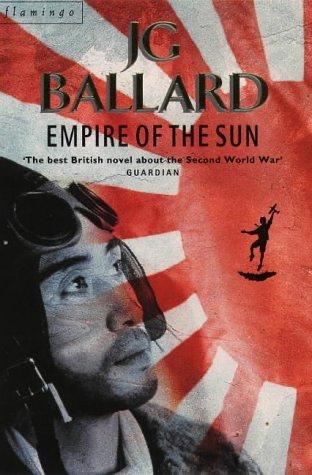
Cover of Empire of the Sun

Empire of the Sun

J. G. Ballard

4 ideas

  1. Jim's separation and survival in Lunghua

    After Pearl Harbor, eleven-year-old Jim is separated from his parents during the Japanese takeover of Shanghai's International Settlement, survives alone in abandoned houses, and is eventually interned in Lunghua camp, where he spends roughly three years scavenging, running errands, and attaching himself to American merchant seaman Basie. At war's end he witnesses the flash he believes is the Nagasaki bomb, survives a death march to a stadium filled with looted goods, and is finally reunited with parents he barely recognizes.

  2. A child's moral neutrality toward war

    Because a child has no settled loyalties, he judges combatants by competence, glamour, and bearing rather than by side, which lets the narrative show war without patriotic framing. Jim admires Japanese pilots and Zero fighters as much as American Mustangs, which exposes how much of adult judgment about war is inherited allegiance rather than observation.

  3. Captivity rewards adaptation over identity preservation

    In the camp, survival goes to those who abandon their prewar status and learn the new economy of favors, trade, and usefulness, while adults who cling to class and national dignity decline. Jim thrives by making himself indispensable to whoever holds power, but the price is that he comes to feel more at home in the camp than in the world it replaced.

  4. War as the collapse of normal reality

    The occupation strips away the pretense of the colonial order, and Jim experiences the resulting landscape of drained swimming pools, abandoned mansions, and corpses as a truer reality than the peacetime world. Once seen, this unmasked world makes the restored order afterward seem fragile and staged rather than solid.

Save and mark ideas in the app